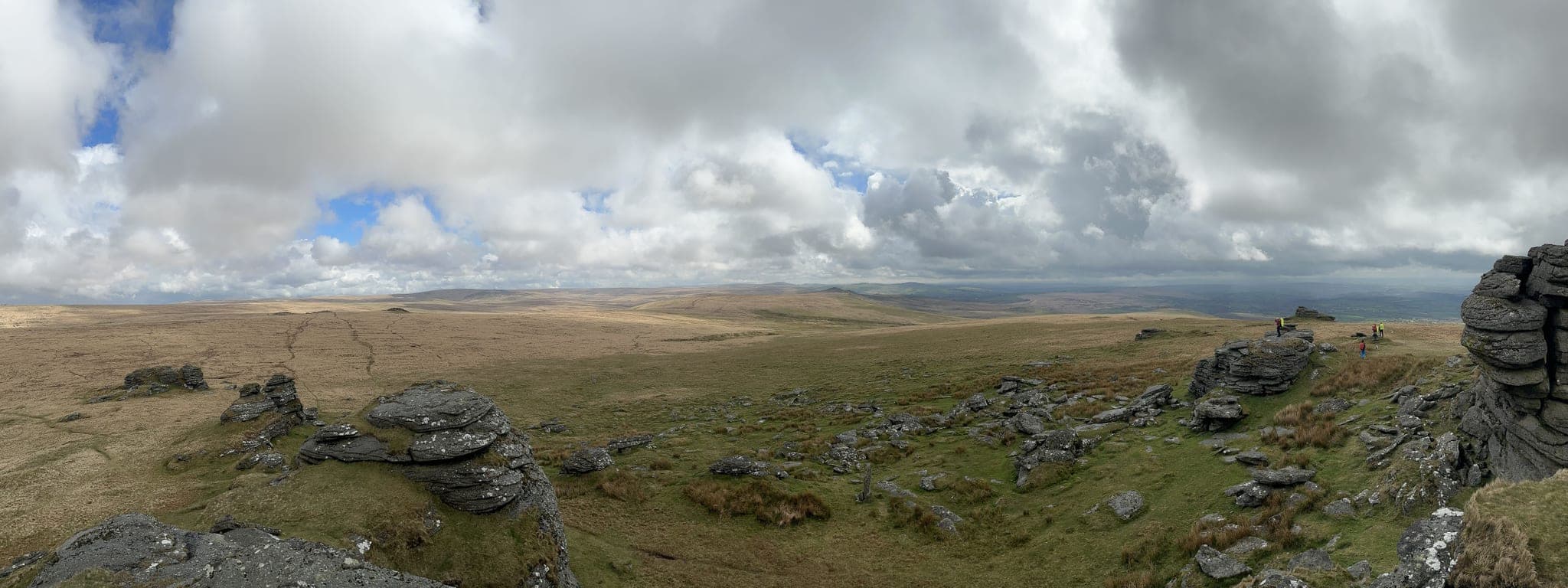
 The team out on Dartmoor
Specialist skills. Shared purpose.
Hasties are experienced team members who have served at least 12 months in a traditional role. They work in pairs or small groups, covering ground at around twice the pace of a walking team. Each member may need to take on several roles during a search, or carry urgent supplies to a casualty, such as oxygen, Entonox, medication, splints or additional medical equipment.
Fitness and resilience
Physical and mental fitness are essential. Readiness is shown through a proven running background and the ability to keep going at night, in poor weather and for an unknown length of time—not simply through race times or distances.
Navigation and searching
Hasties use handrails and catching features where possible, leaving more time to search. Timing and pacing are less useful while running and searching, so GPS supports navigation and helps the team reach grid references. Local knowledge and a good understanding of the moor are valuable. Teams use OS 1:25,000 maps and 1:40,000 Harvey and British Mountain Maps.
Equipment
A Hasty’s pack typically weighs 6–8 kg. Along with full waterproofs, spare warm clothing, food and drink, personal first aid supplies, a map, compass and lights, members carry equipment to help protect and care for a casualty.
- Personal and casualty clothing, including spare gloves, hats and warm layers.
- A head torch, search torch, map, compass, notepad, pen, casrep and foil emergency bag.
- A lightweight helmet for helicopter operations.
- As needed, team equipment such as a group shelter, comprehensive first aid kit, neck brace, strobe or GPS.
Working together
Hasties are experienced rescuers who rely on one another. Leadership is shared and flexible. When they reach a casualty, they may face a demanding situation while further help is still some distance away, so strong first aid and casualty-site management skills are essential. Many Hasties are medical professionals. A sense of humour also helps build team spirit through long, difficult call-outs.
Every specialist is part of the wider rescue team. Regular training helps volunteers bring their skills together when a call-out takes them into challenging terrain.
Explore all team skills